
🤖 Mitch’s newsletter 3.23.2026
🤖 Mitch’s newsletter 3.23.2026
My Facebook Reels are showing me short videos of cats being dusted with flour and kneaded like bread, cats cooking and eating steak, a cat in a chef’s outfit cooking and serving mac and cheese. The videos are realistic but I think they may be AI-generated.
A Reddit discussion of how people organize their podcast playlists.
I use three playlists: One playlist, called “Queue,” is for timely podcasts that I want to listen to that day. These are generally news podcasts.
I have a playlist I call, imaginatively, “Playlist,” that is filled with episodes of podcasts that I know I want to listen to but they’re evergreen podcasts I can listen to any time over the next few weeks.
And there’s the “All” podcast, where new episodes come in.
When I’m going out to walk the dog, or do chores around the house, or driving somewhere, I check the “All” playlist to see what’s new. I move stuff to the Queue, to the Playlist, remove the episode from the “All” list but leave it on my iPhone if it’s slightly interesting, or I delete the episode entirely if it’s of no interest to me.
Starfleet Academy will be canceled after its second season. This is disappointing, but not surprising, given Paramount’s new MAGA ownership.
RIP Valerie Perrine. Hell of a career, hell of a life.
Understaffing as a form of enshittfification.By Cory Doctorow. Understaffing helps big business shift value from workers, patients and customers to investors. It annoys customers, immiserates employees and — in the case of healthcare — threatens lives.
Heather Cox Richardson: Just before he became vice president of the Confederate States of America in 1861, Alexander Stephens of Georgia made it clear what that country, and the upcoming Civil War, was about: Slavery, the supremacy of white men, and that “slavery subordination to the superior [white race is [the Black man’s natural and normal condition.” Stephens dreamed of spreading this ideology around the world.
Richardson:
On March 21, 1861, former U.S. senator Alexander Stephens of Georgia delivered what history has come to know as the Cornerstone Speech, explaining how the ideology and power of elite enslavers in the American South were about to usher in a new era in world history.
Speaking in Savannah, Georgia, just before he became the vice president of the Confederate States of America, Stephens set out to explain once and for all the difference between the United States and the Confederacy. That difference, he said, was human enslavement. The American Constitution had a crucial defect at its heart, he said: it based the government on the principle that humans were inherently equal. Confederate leaders had fixed that problem. They had constructed a perfect government because they had corrected the Founding Fathers’ error. The “cornerstone” on which the Confederate government rested was racial enslavement.
In contrast to the government the Founding Fathers had created, the Confederacy rested on the “great truth” that some people were better than others. Black Americans were “not equal to the white man; that slavery subordination to the superior race is his natural and normal condition. This, our new government, is the first, in the history of the world, based upon this great physical, philosophical, and moral truth.”
Stephens believed that the new doctrine of the Confederacy would spread around the world until southerners had the gratification of seeing “the ultimate universal acknowledgment of the truths upon which our system rests.” Stephens expected the old Union to dissolve and the Confederacy to be “the nucleus of a growing power which, if we are true to ourselves, our destiny, and high mission, will become the controlling power on this continent.”
And yet, when we remember the era that elite southern enslavers thought would see their ideology spreading around the globe and ushering in a new era in human history, we do not remember it as the “Stephens Era.” It is the Era of Lincoln, the man who came to represent those who stood against Stephens and his ilk.
How the Midwest Became the Place to Move. By Olga Khazan at The Atlantic. Julie and I have been talking about moving to Columbus, where she grew up, for nearly as long as we’ve been married. We’ve lived in San Francisco and currently San Diego for all that time.
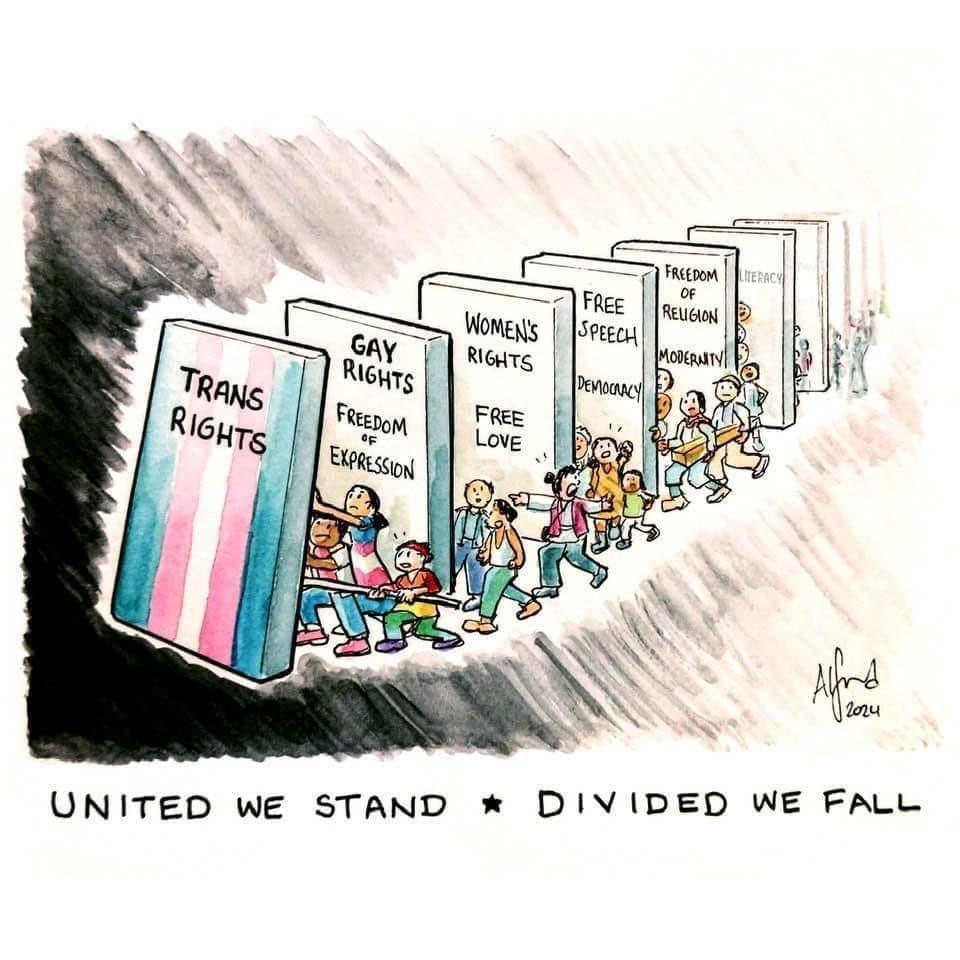
Add a domino labeled “anti-anti-Semitism” and you’ll see one reason why I am an outspoken supporter of trans rights.
Another reason is I have trans friends, and one or two trans writers I’m a fan of.


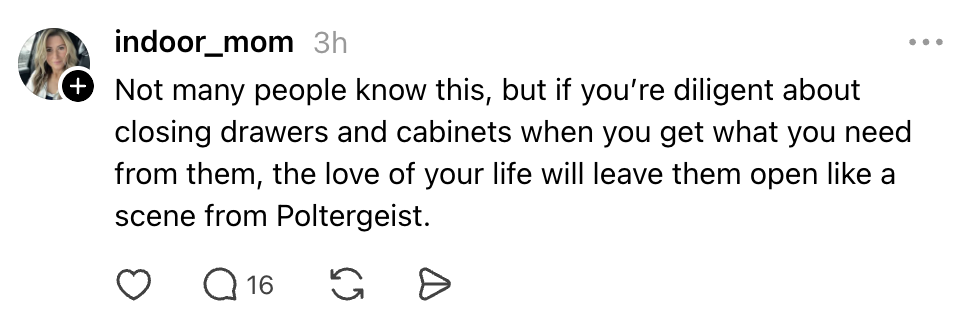
I am the poltergeist in our house.